
Clinical Guidelines: Pharma’s Weapons of Mass Prescription
Where captured research becomes the standard of care.

Medical research is captured by the pharmaceutical industry, and clinical guidelines are where that captured research becomes clinical practice.
Clinical practice guidelines are the documents that tell physicians what to do. They define the standard of care. They determine what doctors prescribe, what insurers cover, and what courts consider acceptable medical practice—making them arguably the single most consequential documents in medicine.
And the organizations that write those guidelines are largely funded by and populated by the industries whose products those guidelines evaluate.
The pharmaceutical industry dictates research. Research dictates guidelines. Guidelines dictate the standard of care. Doctors who depart from that standard risk professional and legal consequences—meaning pharma ultimately dictates not only medical knowledge, but medical practice itself.
Clinical practice guidelines
A clinical practice guideline is a document that tells physicians how to diagnose, treat, and manage disease. For condition X, start with treatment A. If that fails, move to treatment B. Avoid treatment C.
Who writes them
The vast majority of clinical guidelines are written by private specialty societies, including the American Heart Association, the American College of Cardiology, the American Diabetes Association, the American Psychiatric Association, and others.
These are private membership organizations—not government agencies. They have no statutory authority, yet their recommendations effectively govern medical practice.
Why they matter
Guidelines do far more than summarize medical evidence. They define the standard of care and shape insurance reimbursement, hospital protocols, electronic medical record prompts, physician training, and malpractice litigation.
Writing a clinical guideline is effectively writing a prescription for millions of people.
Technically, they are recommendations. In practice, they function as the rules of modern medicine.
Global reach
American clinical guidelines influence medical practice far beyond the United States. Many countries rely on or adapt recommendations produced by major American medical societies. Decisions made by a relatively small number of guideline panels influence healthcare systems around the world.
If those guideline processes are captured, that capture is exported.
The commercial prize
For a pharmaceutical company, influencing clinical guidelines is one of the highest-return investments it can make.
A single guideline recommendation can make a drug the default treatment across entire healthcare systems. Once embedded in clinical guidelines, it no longer has to be sold to individual doctors—it becomes default practice, reinforced by insurance coverage, institutional protocols, and legal standards of care.
The explosion of clinical guidelines
Clinical practice guidelines didn’t always occupy the central role they do today. Before their widespread adoption in the late twentieth century, physicians relied primarily on clinical judgment, training, textbooks, and local practice.
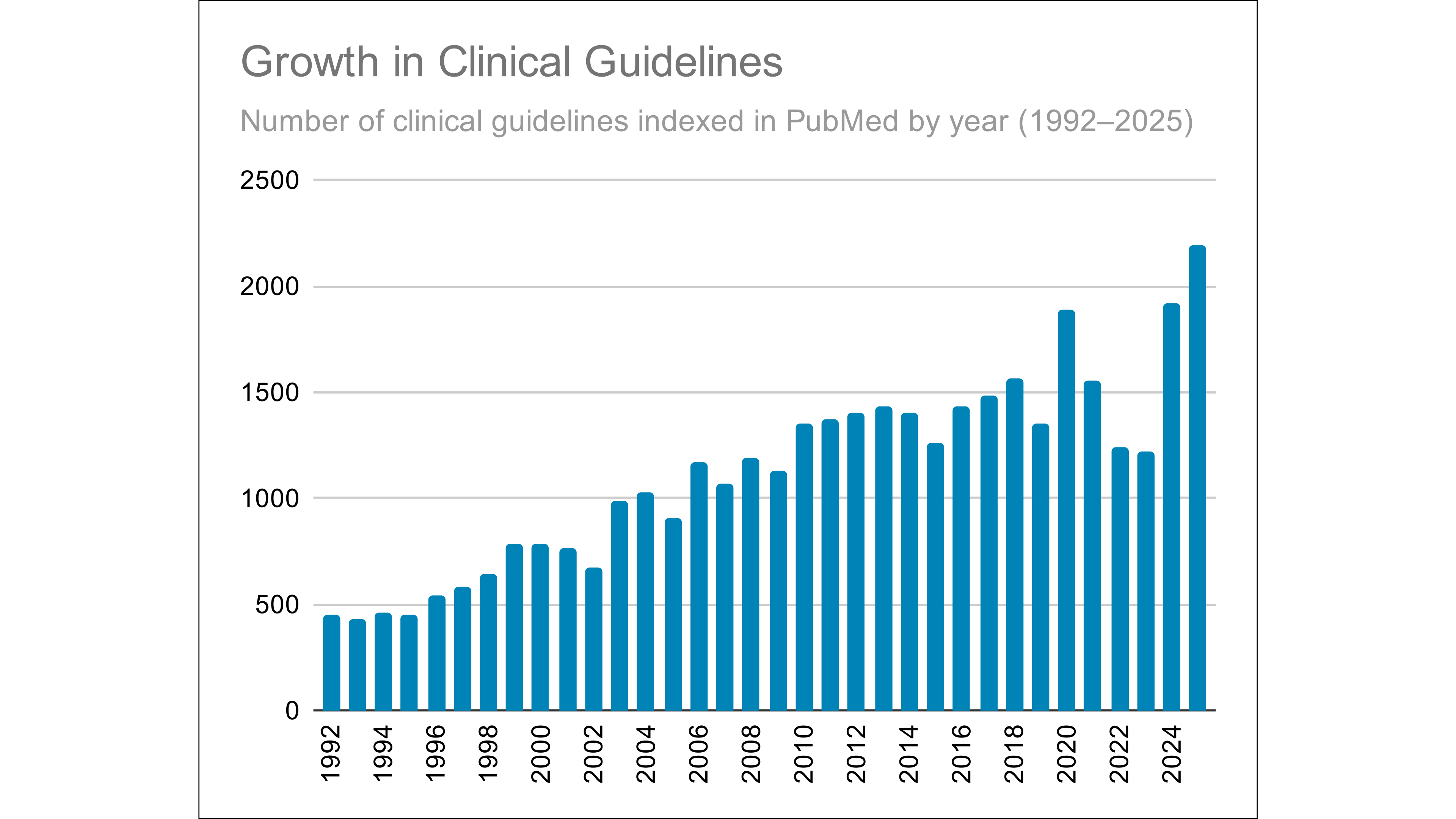
As healthcare became increasingly standardized, guidelines evolved from reference documents into the infrastructure of medical practice. Today, thousands of clinical guidelines exist across medical specialties, with hundreds of new or updated guidelines published every year.
Guidelines derive their power not from law alone, but from the systems built around them.
In malpractice litigation, they are routinely used as a proxy for the standard of care, increasing legal risk for physicians who depart from them. Hospitals and insurers reinforce the same recommendations through reimbursement policies, clinical protocols, and electronic medical record systems.
As a result, clinical decision-making is increasingly shaped by institutional systems rather than individual judgment. Guidelines no longer simply summarize medical evidence—they define the practical boundaries of acceptable medical practice.
Capture of clinical guidelines
Both the organizations that produce clinical guidelines and the people who write them are captured by the pharmaceutical industry.
The guideline bodies
The organizations that write clinical guidelines are funded by the companies whose drugs those guidelines recommend.
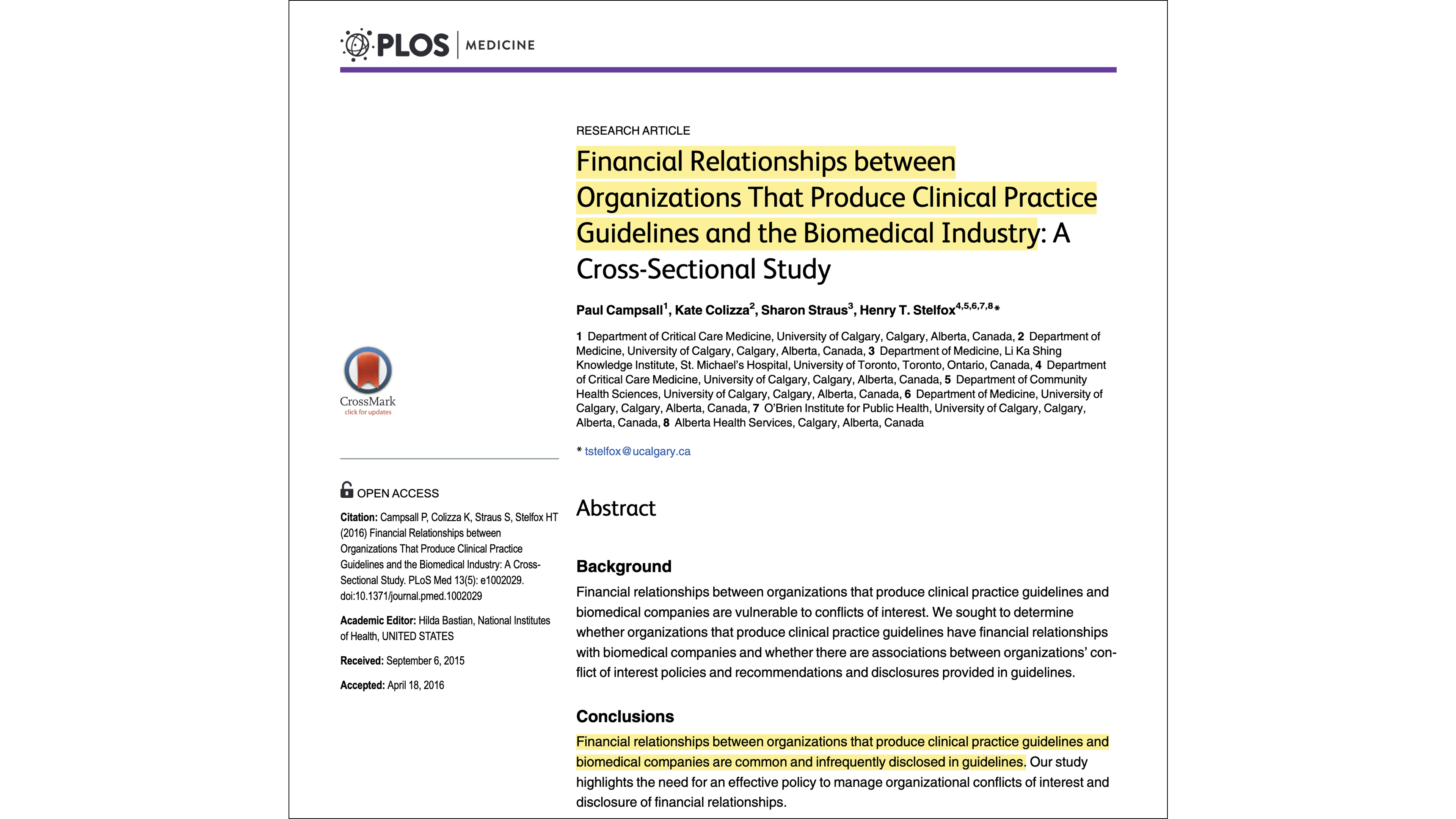
A 2016 PLOS Medicine study examined financial relationships between organizations that produce clinical guidelines and the medical industry. The majority had financial relationships with industry. Most had conflict-of-interest policies on paper, but few had procedures for enforcing them. The policies existed—the enforcement didn’t. Only 1% of guidelines disclosed the producing organization’s own financial relationships.
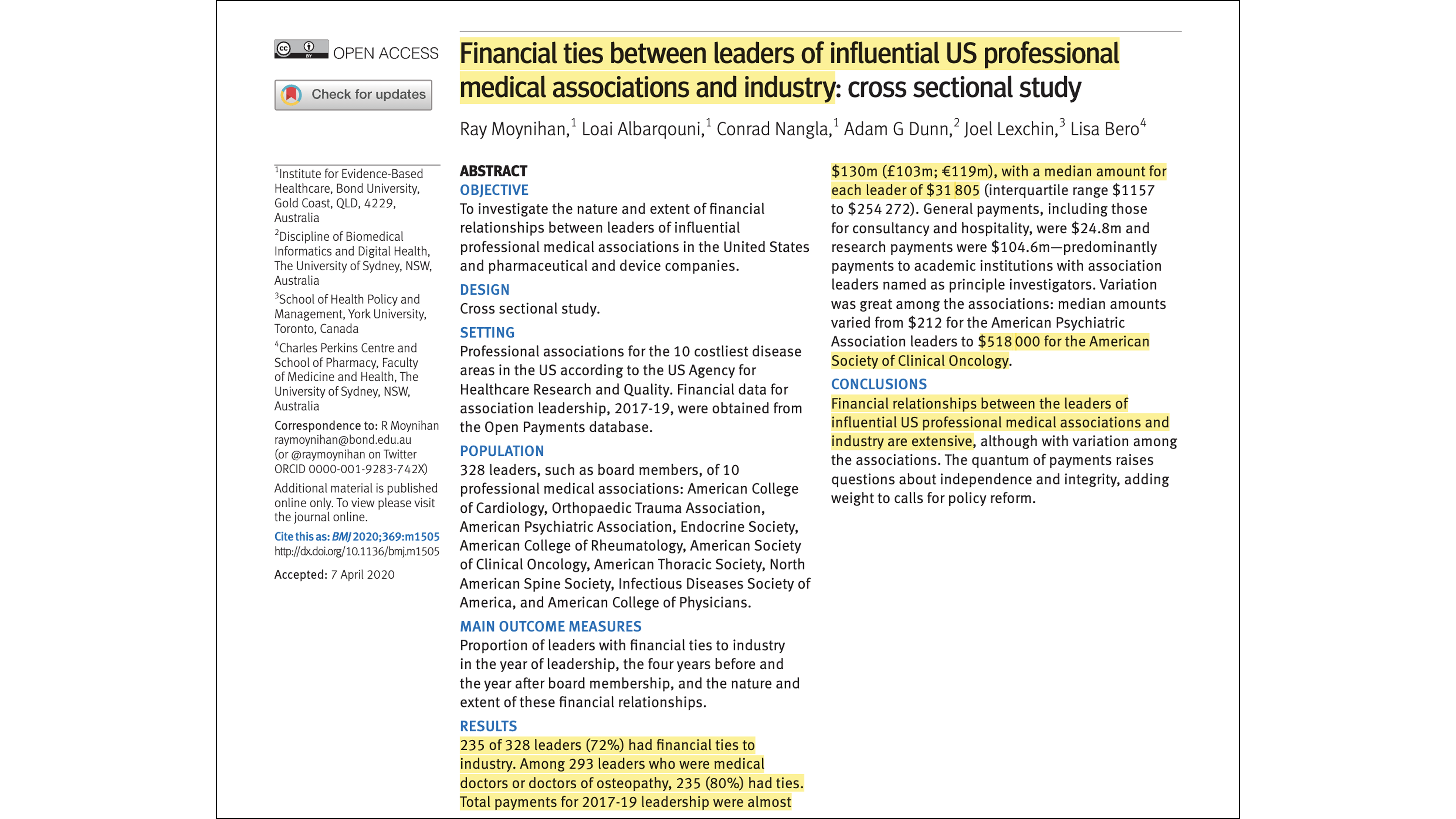
A 2020 BMJ study found that 72% of leaders of major U.S. medical associations had financial ties to industry—rising to 80% among physicians. Across the top ten disease areas, total payments to leaders approached $130 million over five years. At the top end, median individual payments exceeded $500,000 for leaders at the American Society of Clinical Oncology. Not one organization had a leadership free of industry ties.
This is not just an American phenomenon. A 2023 study of executive board members of Japanese internal medicine societies found that 99% had received personal payments from pharmaceutical companies over five years. Total payments exceeded $70 million, with a median five-year combined payment per board member of $150,849.
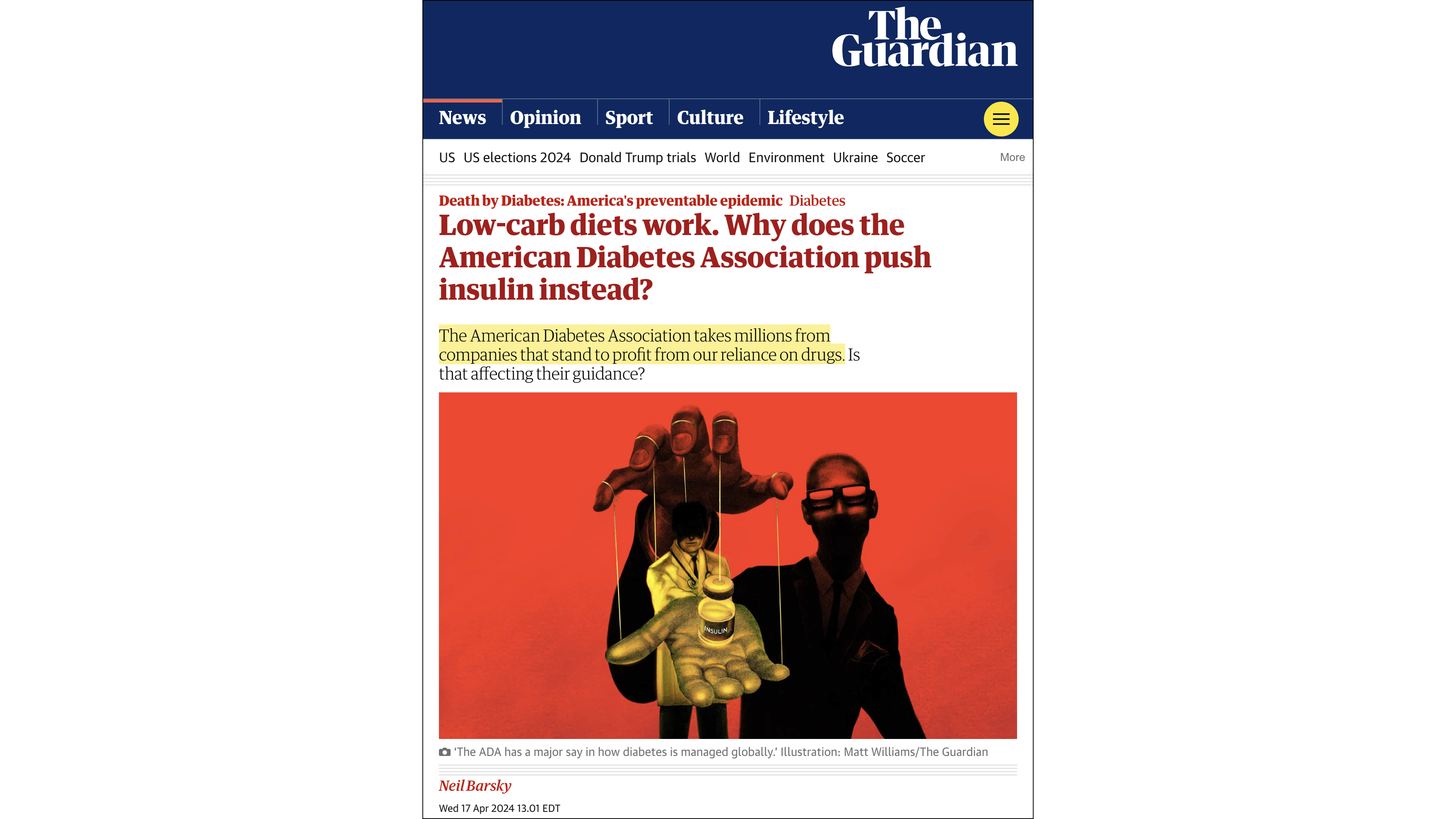
The American Heart Association receives approximately $40 million annually from pharmaceutical and device companies. The American Diabetes Association receives tens of millions in industry funding. The American Psychiatric Association is heavily funded by antidepressant and antipsychotic manufacturers. These same organizations write the cardiovascular, diabetes, and psychiatry guidelines that define the standard of care.
The panel members
The organizations that produce clinical guidelines do not write them directly. They appoint committee members to decide what the guidelines will recommend. Those committees are no less intertwined with industry than the organizations themselves.
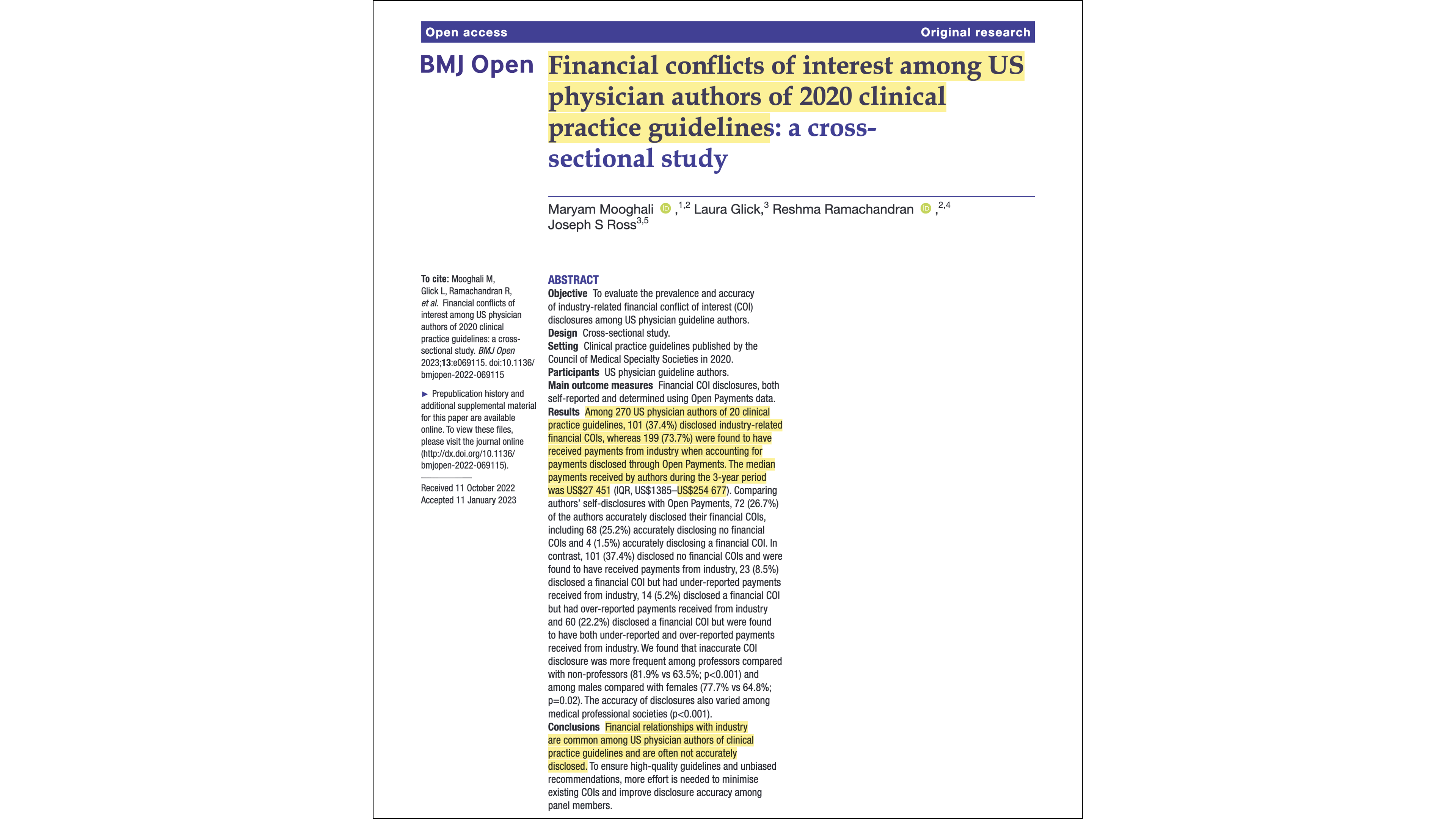
A 2023 BMJ Open study comparing self-reported disclosures to the Open Payments database found that, over a three-year period, 74% of U.S. physician authors of clinical guidelines received industry payments, but only 37% disclosed any conflict. The median payment was over $27,000. The top 25% of authors received more than $254,000. In total, these authors received $98.7 million, including $24 million that was not disclosed.
Guideline chairs were especially compromised: 82% had financial conflicts of interest, and not a single one disclosed them accurately.
A broader 2021 Mayo Clinic Proceedings review of 37 studies covering 14,764 guideline authors found that 45% had at least one financial conflict of interest, with rates reaching 100% in some specialties. Thirty-two percent had undisclosed industry payments.
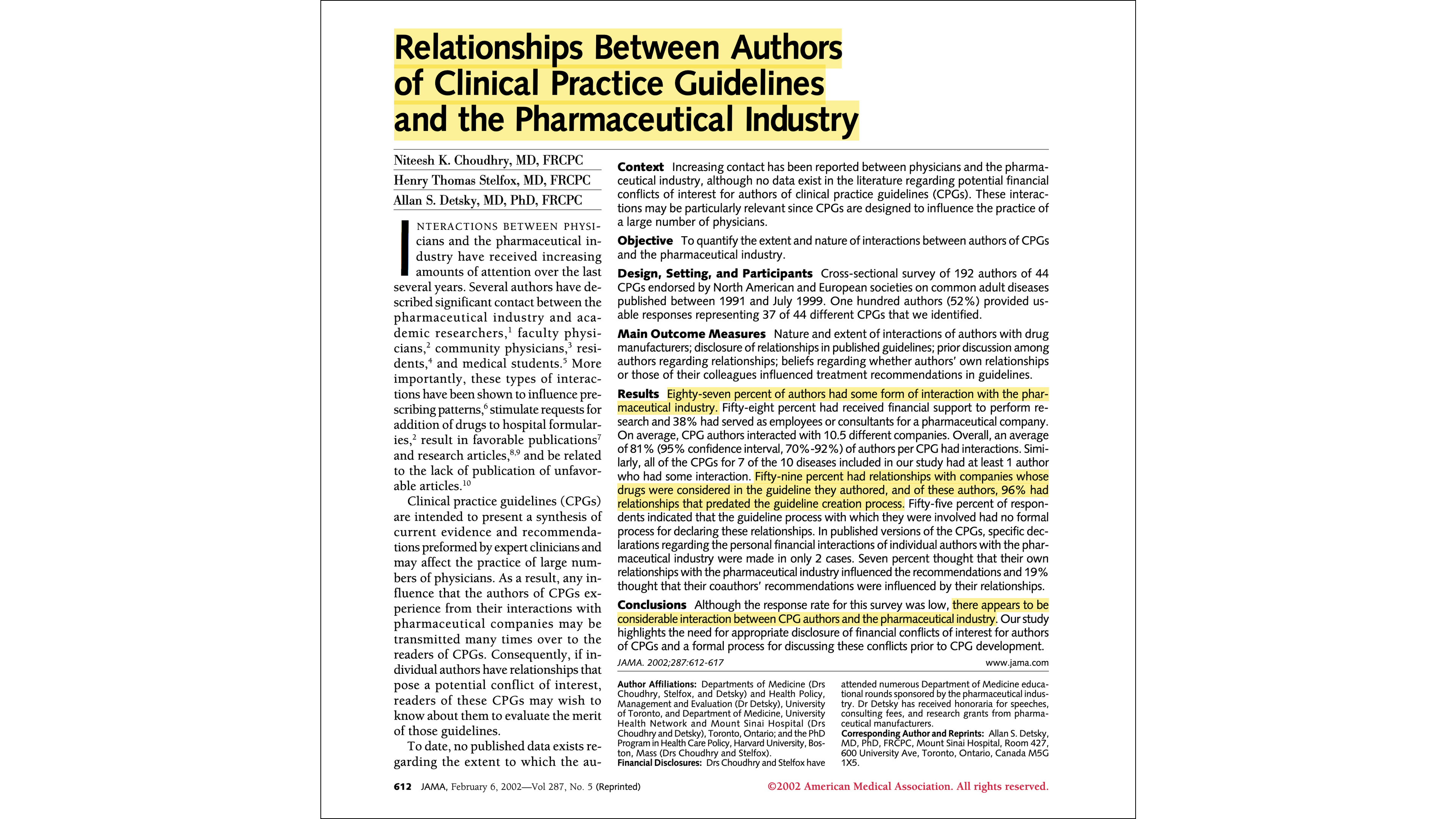
A 2002 JAMA study found that among 100 respondents representing 37 clinical practice guidelines, 87% reported interactions with pharmaceutical companies, 58% had received research funding, and 38% had served as employees or consultants. Authors had ties to 10.5 different companies on average. Fifty-nine percent had relationships with companies whose drugs were directly considered in the guidelines they were writing, and 96% of those relationships predated the guideline process. Only 2 of 44 guidelines disclosed any of these relationships.
Disclosure as theater
Disclosure doesn’t eliminate bias. It normalizes it. When financial conflicts are universal, disclosure turns them into the baseline rather than an exception.
Disclosure also functions as “moral licensing”—giving physicians psychological permission to be more influenced by industry relationships, not less, because they feel transparency has absolved them of the conflict.
Corruption of clinical guidelines
Corruption in clinical guidelines does not just come from who sits on the panels—it’s embedded in how evidence is selected, interpreted, and turned into recommendations.
How recommendations become distorted
Guideline recommendations are only as good as the evidence they’re built on. That evidence base is not neutral. It has been shaped at every stage by the industry that stands to benefit from the recommendations.
Many guideline recommendations are based on changes in laboratory measurements rather than whether patients actually live longer or feel better. A drug can receive a strong recommendation simply for improving a test result.
The GRADE system—the main framework used to judge the quality of evidence in clinical guidelines—is supposed to distinguish strong evidence from weak. In practice, studies that look rigorous on paper can still receive high ratings despite being funded by industry, relying on indirect measures of health, or ending before long-term harms can be measured.
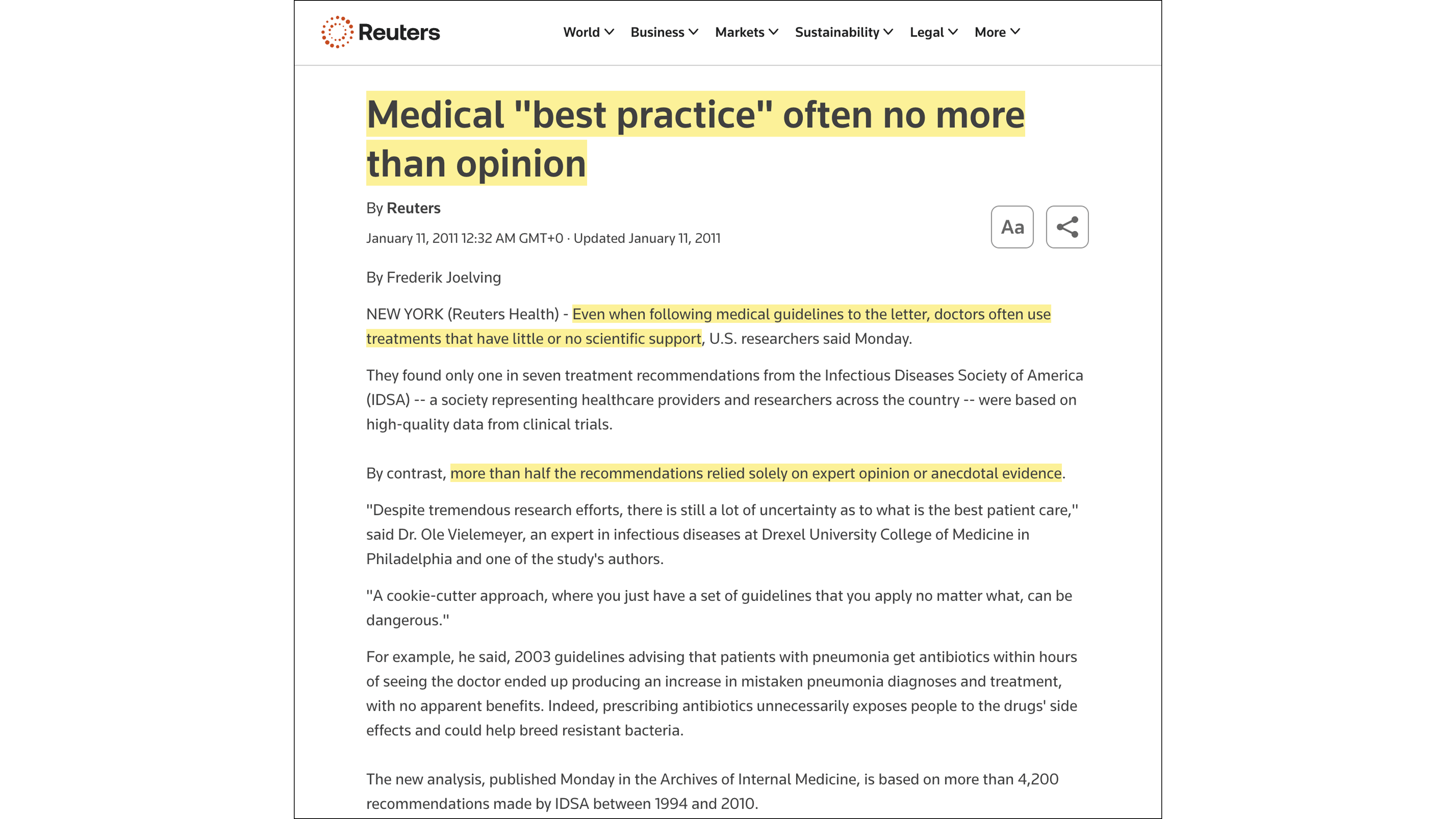
Roughly half of guideline recommendations are based on opinion from guideline authors rather than high-quality evidence. That opinion becomes the guideline. The guideline becomes the standard of care.
The drug bias
Guidelines systematically favor pharmaceutical interventions over non-pharmaceutical approaches. The reason is structural: drugs have companies behind them to fund trials and influence panels—lifestyle interventions don’t.
This creates a built-in imbalance in the evidence base. Drugs are extensively studied and heavily promoted, whereas diet, exercise, and behavioral interventions aren’t. Guideline panels are dominated by specialists whose careers are built around pharmacological treatments.
The result is a system that predictably produces drug-based recommendations over non-drug alternatives.
Industry’s effect on recommendations
There is a consistent association between financial conflicts of interest and more favorable recommendations for a sponsor’s drug or device.
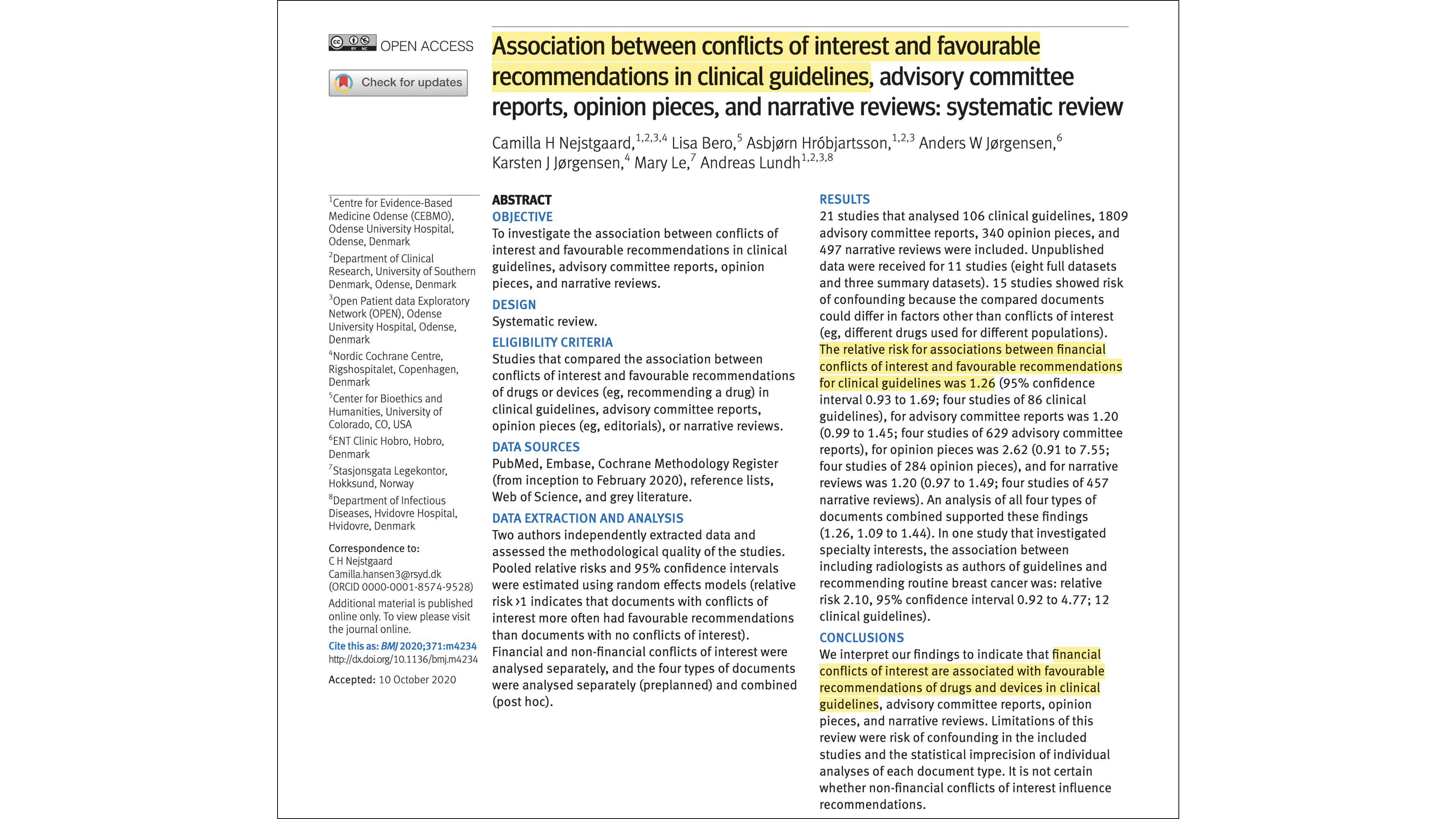
A 2020 BMJ review found that conflicted guidelines were 26% more likely to make favorable recommendations for a sponsor’s drug or device—and this is likely a substantial underestimate. Many of the included studies relied on only disclosed conflicts of interest, which underreport industry relationships. Guideline recommendations are also built on clinical trials and reviews that are themselves influenced by industry funding. A separate Cochrane review found that industry-funded trials were 34% more likely to report favorable conclusions. The result is a layered system of bias: industry-funded trials feed into systematic reviews, which feed into guidelines. The measured effect therefore represents only the absolute floor of industry influence.
Threshold manipulation: creating new patients
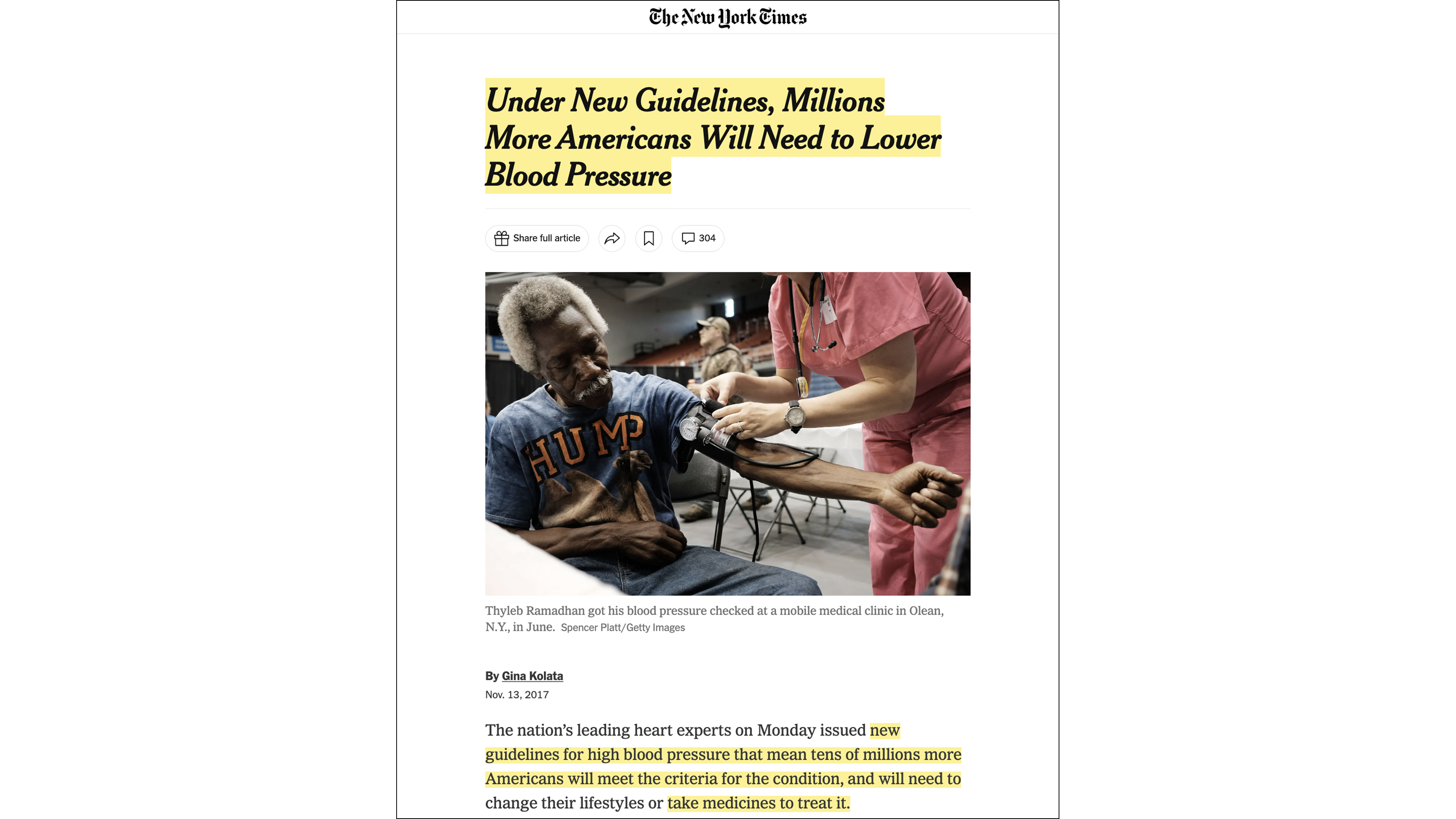
Guideline panels don’t just recommend treatments—they define who is sick. By shifting diagnostic thresholds for disease, they create millions of new patients.
Pre-diabetes. Pre-hypertension. A person can move from “healthy” to “at risk” simply because a guideline committee changes a diagnostic cutoff. Someone whose blood pressure was “normal” yesterday can become “pre-hypertensive” today because the threshold moved.
Each new threshold expands the population eligible for treatment. Pre-diabetes creates a market for blood sugar-lowering drugs. Pre-hypertension creates a market for blood pressure medications.
The ratchet effect of guidelines
Guideline recommendations almost always move in one direction: expansion.
Treatment thresholds are lowered, new disease categories are introduced, and screening recommendations extend to broader populations. Once these changes are made, reversals are exceptionally rare.
Doctors are less likely to follow guidelines for themselves
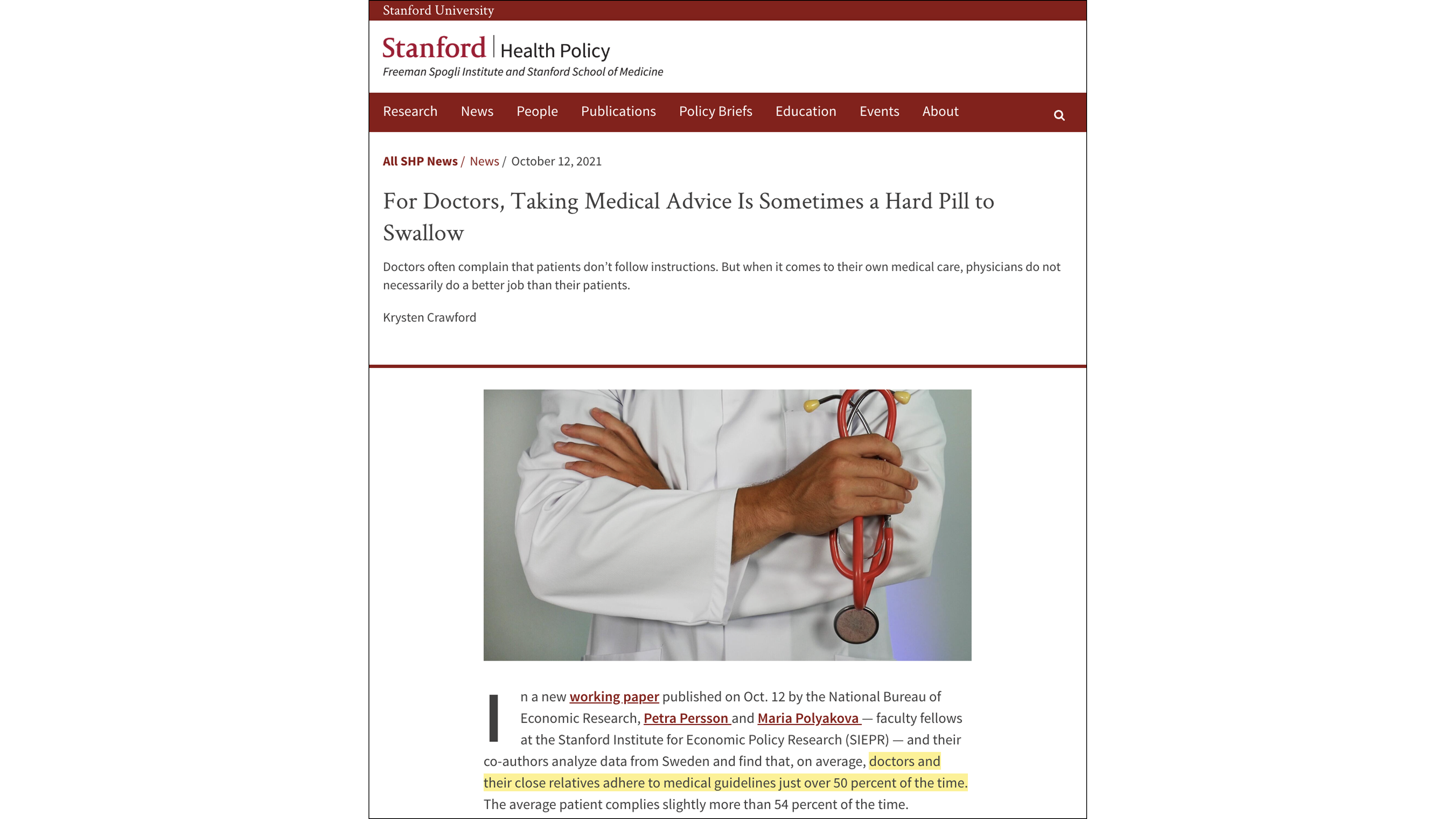
If clinical guidelines reflected optimal medical practice, you would expect doctors to adhere to them most closely for themselves—but the opposite is true. Doctors are less likely to adhere to clinical guidelines than the general population.
A nationwide study of the Swedish population examined adherence to 63 prescription drug guidelines across the entire population, comparing the general public with physicians and their close family members. Across all guidelines, physicians and their families followed recommendations just over 50% of the time—less than the general population.
Conclusion
Pharmaceutical companies fund the organizations that write clinical guidelines. Those guidelines become the standard of care. Doctors who depart from them risk being sued.
Clinical guidelines are the point where upstream corruption becomes downstream harm—captured research becomes captured clinical practice. The result is a medical system where the rules are written by those who profit from them.
The guidelines aren’t the guardrails. They’re the cage.
The most important documents in medicine are the ones most patients will never see and most doctors will never question.
You don’t need to control the doctors if you control the rules they’re forced to follow.
This article is part of an ongoing series on the epistemic capture of modern medicine.
Published:


Upcoming:
Regulatory Agencies
The Media
These articles will make up a crash course on the epistemic capture of modern medicine—in the same vein as my Vaccine Crash Course series:


Subscribe to follow the series and receive future installments in your inbox.
If you found this useful, share it with a friend, become a paid subscriber, or gift a subscription. Paid subscriptions give you full access to every article and help this Substack climb the rankings to reach more readers.
Update: The Dr. Wojak Substack Chat has been overhauled. It used to get noisy—now paid subscribers control new threads, keeping discussions focused and higher quality. Everyone can still read and reply. If you left before because of notification fatigue, that’s been fixed—and worth coming back to.
Fantastic article covering a topic I very seldom see addressed. ..."Clinical practice guidelines are the documents that tell physicians what to do."...and nowhere in those guidelines is a physician taught to actually heal a patient or encourage him in the direction of self healing.
To be captured by the pharmaceutical industry...I can think of no worse torture. That means patients will be further traumatized by the invasion of deadly and toxic vaccines and drugs into their bodies under the guise of health and healing. Standard of poisoning is closer to the truth.
Nowhere along the line are doctors encouraged to investigate and present the root causes for illness and disease. The body enters the world as a pristine marvel and any deviation from that such as an ailment, illness or disease has specific causes which usually remain outside the purview of clinical practice guidelines.
This is exactly where modern medicine has totally failed. And the very reason I will not submit myself to its lunacy unless I am faced with life or death circumstances. In emergency medicine, at least there is some crumb of hope they can postpone death. As far as keeping you healthy along the road of life...forget it.
We all must become our own doctors and leave the conventional medical system for chronic care.
The conventional medical system cares for the system, not for us.
Why would anyone go into medicine now? Doctors and nurses are just technicians following protocols set by the industry. They have no more creative autonomy or discretion. Soon with AI it will be even more locked down. Follow the AI advice or lose your license.
The next step will be nano-bots inside our bodies that will communicate with the AI medical system in the cloud. It will read your signs and symptoms and automated test results remotely and decide whether you are sick or not and whether you can participate in society or not.
Doctors will be eliminated as an expensive useless appendage to a system that no longer needs them.
I suggest we adopt India's approach to medicine. Eliminate the monopoly that conventional medicine has. India has three different medical systems that compete - Homeopathic, Ayurvedic and Conventional. All three have a regulator, medical schools, hospitals, pharmacies, doctors, etc.. Doctors of all three can see patients in any hospital. As a result India gives their patients choice. They can choose if they want invasive medical care or not. For ayurvedic we would substitute Functional Medicine/Herbal/Chiropractic/Chinese Med/etc. Competition in medical care like anywhere else makes it more affordable with better accountability.