
The Media: Pharma’s Weapon of Mass Deception
Where pharmaceutical narratives are laundered into public legitimacy.

Modern medicine is captured by the pharmaceutical industry, but that capture is only effective to the extent that it is accepted by the public. The media is the mechanism through which that influence is translated into public legitimacy.
The media is not a neutral pipeline for medical information. It operates within an information ecosystem shaped by financial incentives and institutional relationships that systematically favor pharmaceutical interests—determining which stories receive attention, which voices are amplified, and how evidence is understood.
Ownership and governance ties between media and pharma
Media coverage is shaped not only by journalists and editors, but also by the corporate structures behind the organizations that produce it. Ownership and governance ties between media companies and pharmaceutical companies create incentives that influence what issues receive attention and how they are covered.
Common ownership
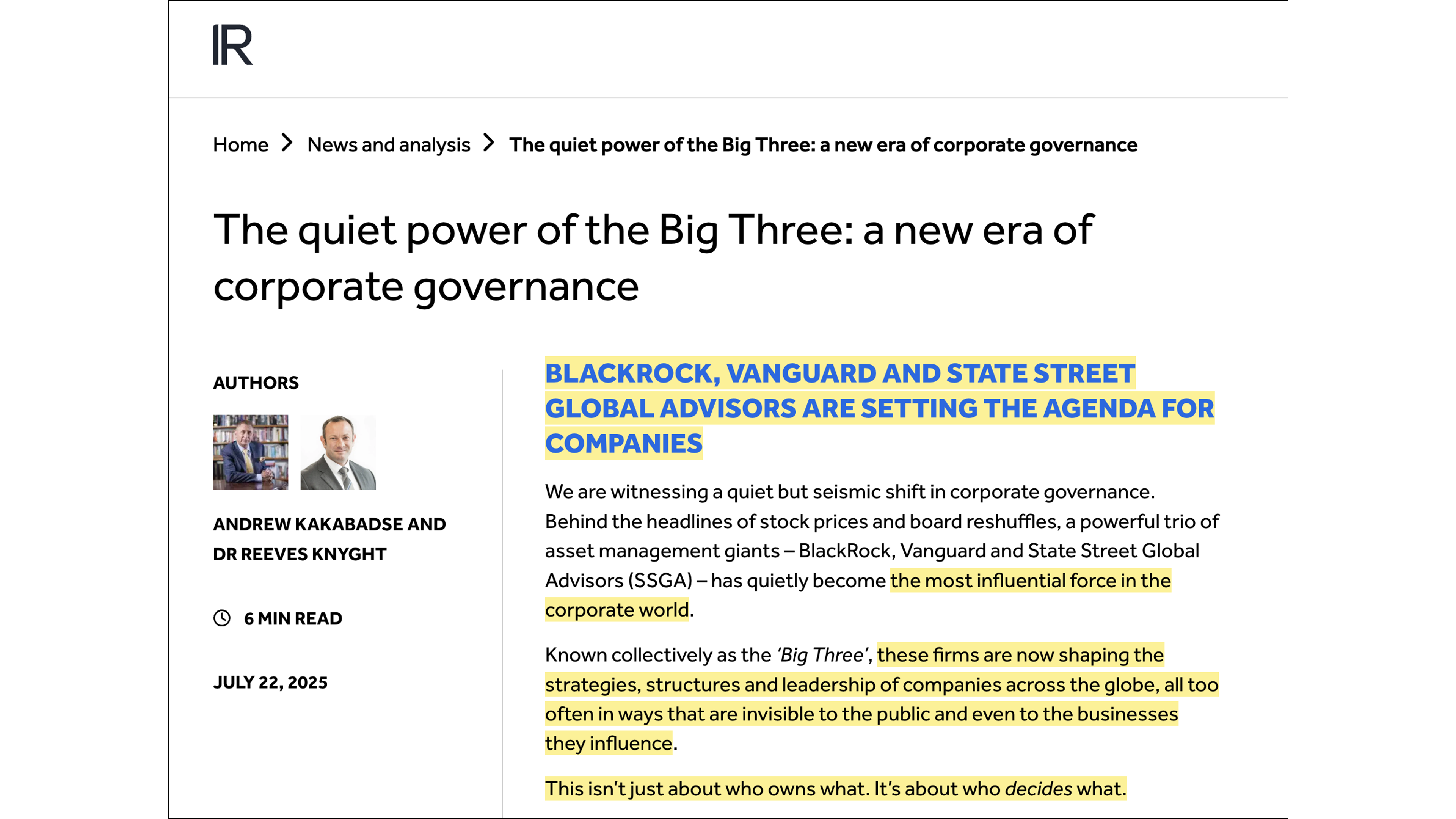
The largest U.S. asset managers—namely BlackRock, Vanguard, State Street, and Fidelity—are the largest shareholders of both the largest media companies and the largest pharmaceutical companies—not just in the United States, but around the world.
This common ownership creates a structural alignment of interests. Asset managers do not need to telephone editors or issue instructions to newsrooms. The ownership structure does the work for them.
These asset managers wield enormous influence through corporate governance. Their ownership stakes give them the leverage to shape who sits on corporate boards, how executives are rewarded, and other major company decisions. Public-company executives know that maintaining the confidence of their largest institutional shareholders is essential, while losing that confidence can have serious consequences for both leadership and share price.
The result is a powerful system of institutional discipline. Media executives know who their largest owners are and what those owners expect. They do not need explicit instructions—incentives alone are often sufficient. A media company whose largest shareholders also own billions of dollars in pharmaceutical companies has little incentive to subject that industry to sustained adversarial scrutiny.
Overlapping board members
Beyond common ownership by asset managers, media and pharmaceutical companies have also been connected through overlapping board members—the same individuals can hold leadership positions in both industries. Corporate boards influence executive selection, strategic priorities, and major corporate decisions.
A 2009 analysis examined nine major U.S. media corporations and found that six had directors who also served on the boards of pharmaceutical companies. Including health insurance companies, eight of the nine media corporations had overlapping directors with either the pharmaceutical or health insurance industries—only CBS had no such overlap.
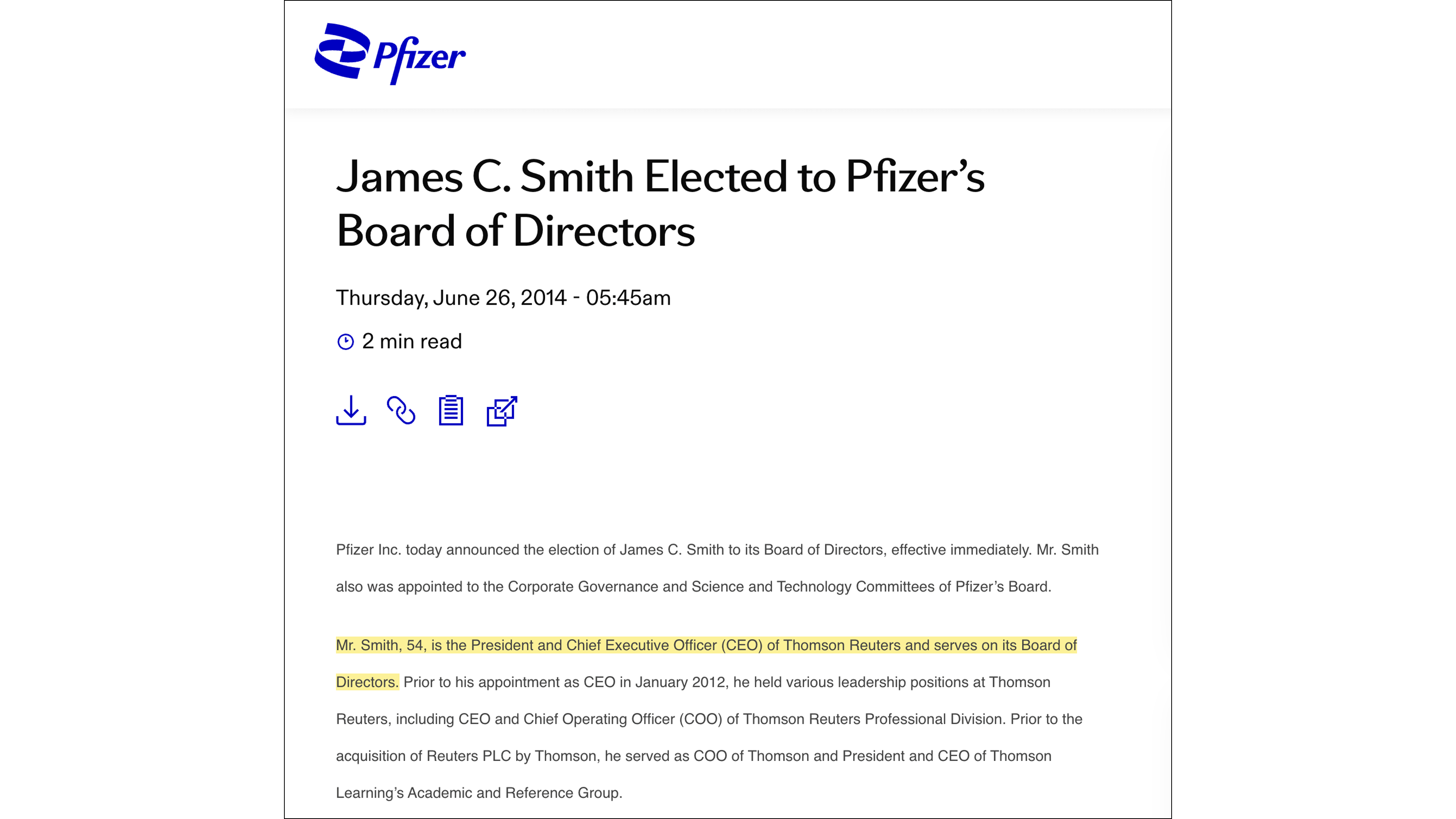
A more recent example is James C. Smith, who served as Thomson Reuters’ president, CEO, and a member of its board of directors from 2012 to 2020. In 2014, while leading Thomson Reuters, Smith joined Pfizer’s board of directors and was appointed to Pfizer’s Corporate Governance Committee and Science and Technology Committee. Thomson Reuters owns Reuters, one of the world’s largest and most influential news organizations, whose reporting reaches audiences worldwide and is widely republished by other media outlets.
Media’s dependence on pharmaceutical advertising revenue
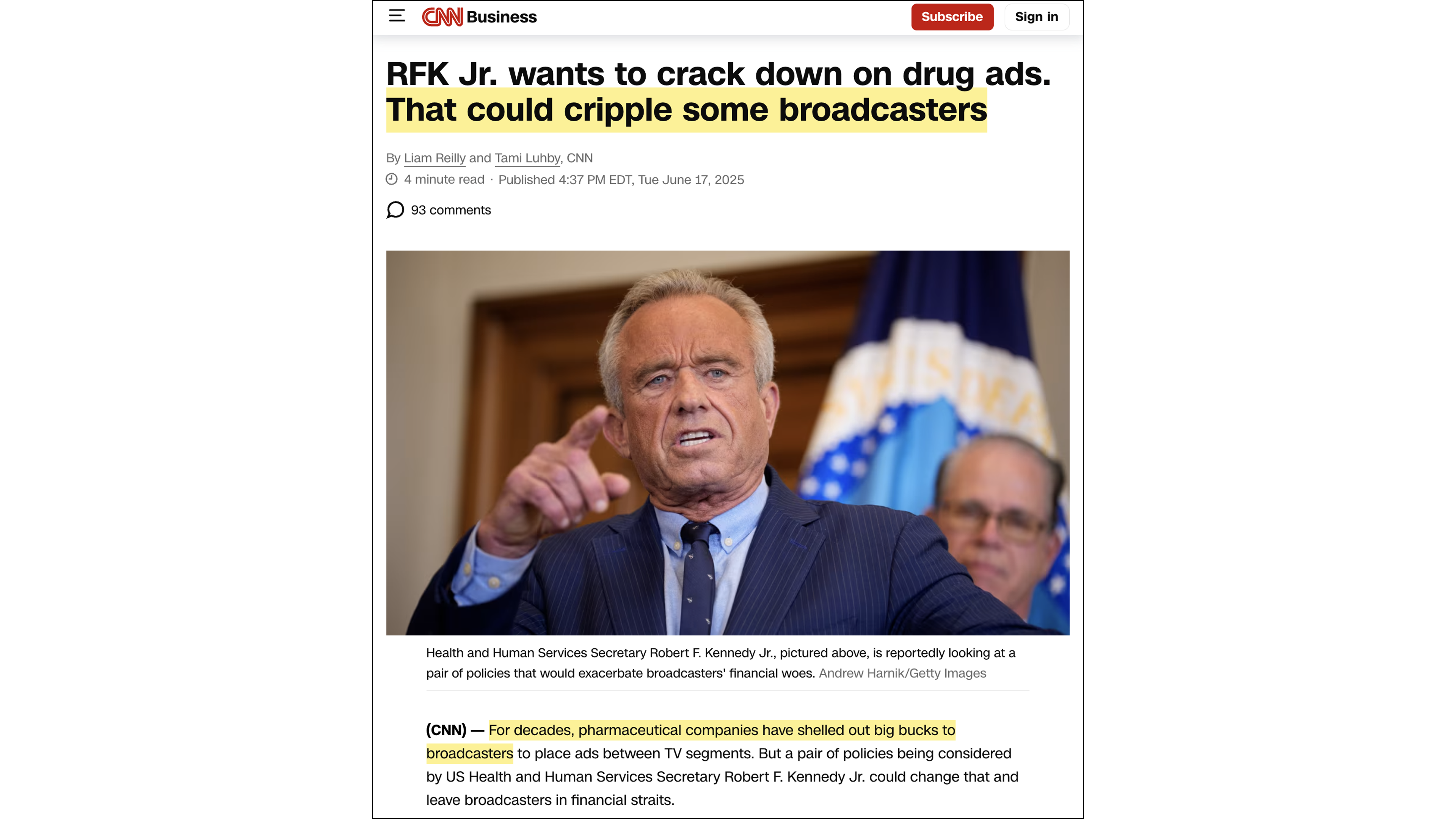
The pharmaceutical industry is one of the largest sources of advertising revenue for U.S. media. Unlike many industries that have shifted heavily toward digital marketing, pharmaceutical companies devote an unusually large share of their advertising budgets to television, print, and radio, making them one of the most important financial supporters of legacy news organizations.
This relationship expanded dramatically after the FDA’s 1997 guidance unlocked large-scale direct-to-consumer prescription drug advertising on television and radio. Over the following two decades, spending on these advertisements grew nearly fivefold, from $1.3 billion in 1997 to $6 billion in 2016.
Commercial media organizations depend on advertising revenue to finance their operations. When an industry is one of their largest sources of revenue, that financial dependence will shape what gets investigated, how issues are framed, and how much scrutiny that industry receives—even without direct interference. The result is a structural incentive to limit coverage that could damage valuable commercial relationships.
This isn’t merely theoretical. A 2016 study analyzing more than 80,000 newspaper articles found that pharmaceutical advertising was associated with significantly less critical coverage. Articles about advertisers’ drugs used fewer negative words, and for every additional $100,000 a newspaper received from a pharmaceutical company, coverage of safety issues for that company’s drugs fell by 23–33%, while mentions of side effects declined by 9–20%. A follow-up 2020 study found that this bias was strongest when companies faced negative news events. Advertising doesn’t merely increase visibility—it provides protection from scrutiny.
These findings capture only the most measurable effects of advertising influence. Studies can quantify changes in coverage, language, and tone, but they cannot easily measure issues that are never investigated or perspectives that never enter mainstream discussion. Financial dependence influences not only how an industry is covered, but also the boundaries of what coverage is considered viable in the first place.
How pharmaceutical PR becomes medical news
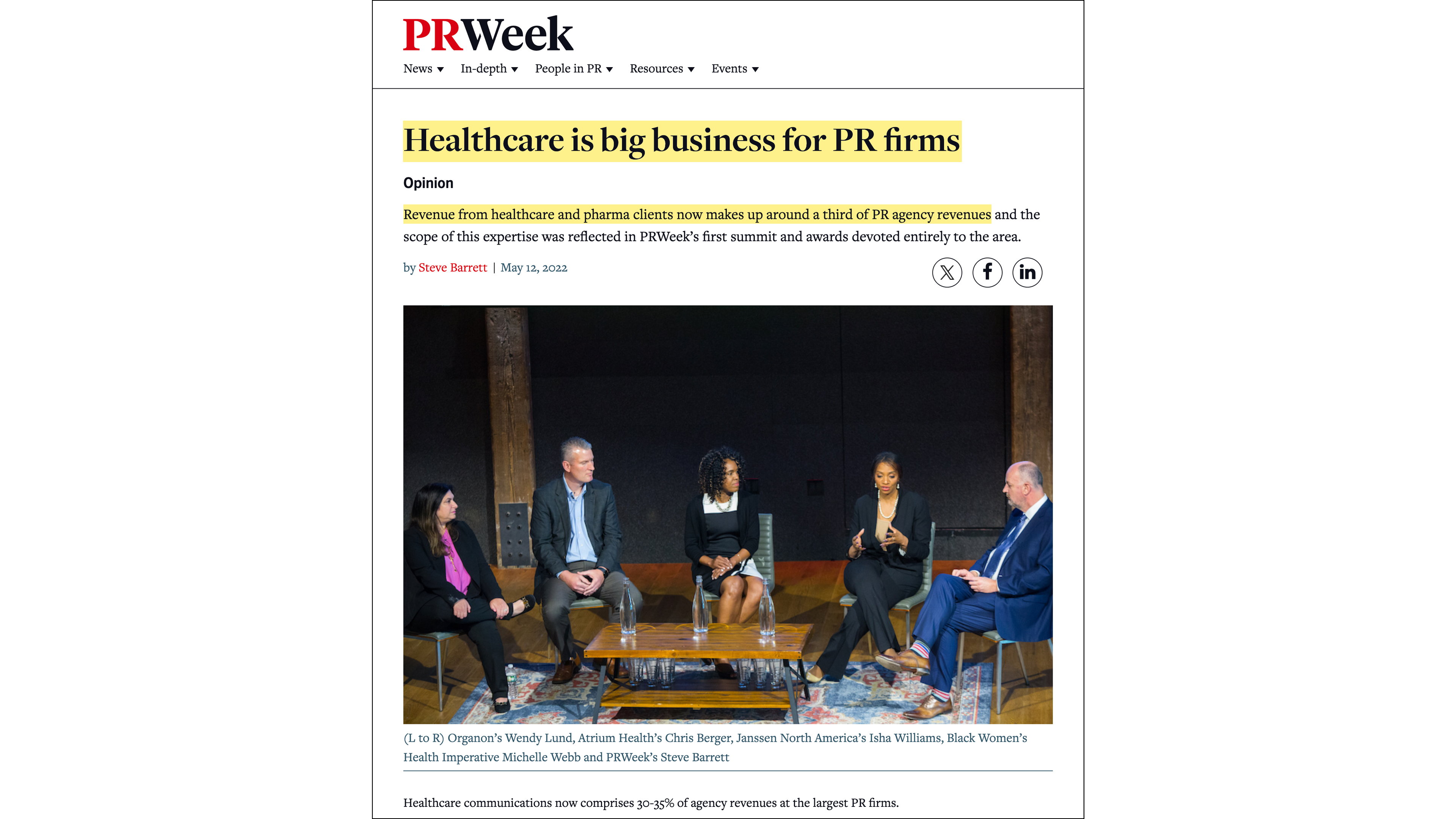
Before health stories reach the public, they have often already passed through an extensive public relations pipeline. Pharmaceutical companies invest heavily in PR, and healthcare is the largest specialty sector in the U.S. public relations industry, with healthcare and pharmaceutical clients accounting for roughly one-third of revenue at large PR firms. Press releases, media briefings, broadcast packages, and sponsored content provide pre-packaged narratives that enter news organizations before independent reporting begins.
Press-release journalism
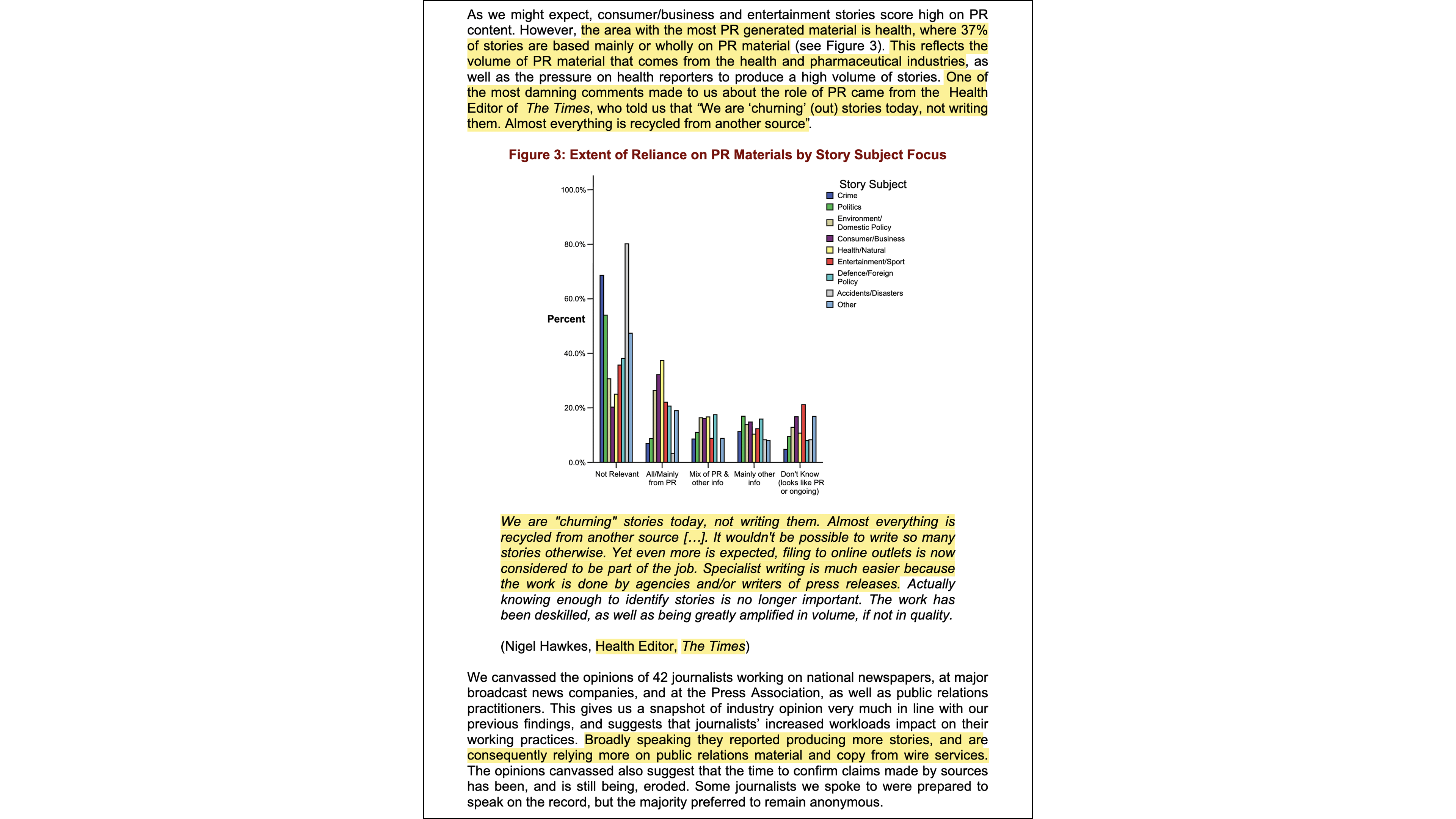
Health reporting often relies on press releases supplied by pharmaceutical companies and PR firms. This practice is known as “churnalism”—the production of news by recycling press releases and other pre-packaged material. A 2006 UK study found that health reporting was the news category most dependent on PR material: 37% of health news stories were based mainly or wholly on PR, compared with 20% of newspaper stories overall. Health news stories frequently reproduced press-release material with limited independent verification or additional reporting.
The problem is not merely that journalists rely on press releases, but that the framing of those releases is often carried directly into news coverage. A 2014 BMJ study examining 462 health-related press releases and 668 resulting news stories found that 33% to 40% of press releases exaggerated findings from the underlying research. When press releases contained exaggerated causal claims, resulting news stories were 20 times more likely to reproduce the same exaggeration. When press releases overstated the relevance of animal research to humans, news stories were 56 times more likely to reproduce the same exaggeration. Much of the distortion in health news was already present in the press releases that shaped subsequent coverage.
The PR pipeline also determines which information gets omitted. A 2021 BMJ Open study found that while 94% of scientific papers disclosed their funding sources, only 29% of press releases and just 9% of resulting news stories did. But when press releases included funding information, news outlets were three to seven times more likely to include it as well—showing that what public relations leaves out often disappears from the news altogether.
Broadcast-ready public relations
Pharmaceutical public relations extends beyond written press releases. Pharmaceutical companies and their PR agencies also produce video news releases (VNRs)—professionally produced television segments designed to appear in news broadcasts with little or no additional reporting.
A 2006 study found that major U.S. television stations broadcast pharmaceutical-sponsored VNRs as news while almost never disclosing their source. The investigation tracked 87 instances of VNR use—only one included any disclosure, and even that identified the PR firm rather than the corporate sponsor. The VNRs tracked reached more than half of the U.S. population, showing that pharmaceutical PR reaches large national audiences rather than remaining confined to isolated outlets.
The problem was not only that stations used pre-packaged material, but that they often transformed it into something that appeared to be independent journalism. In more than 60% of documented cases, stations re-voiced VNRs using their own anchors or reporters, sometimes repeating the original PR script word for word. Some stations also added their own graphics and branding to further obscure the corporate sponsor.
Sponsored content and native advertising
The boundary between journalism and advertising has also blurred through sponsored content, advertorials, and native advertising. Unlike traditional advertisements, these formats are designed to resemble editorial content, adopting the publication’s style, language, and appearance while carrying messages on behalf of corporate sponsors.
Many readers struggle to distinguish native advertising from independent journalism. A 2016 study found that fewer than 8% of participants correctly identified native advertisements as advertising, even when disclosures such as “sponsored content” or “advertisement” were used. When readers were made aware of the commercial nature of native advertising, they became more skeptical of the content—suggesting that its effectiveness depends on being mistaken for independent information.
For pharmaceutical companies, this creates a way to present promotional messages in the language of medical education rather than traditional advertising.
Sources, framing, and narrative control
Pharmaceutical influence extends beyond the production of medical knowledge to how that knowledge is communicated, interpreted, and understood by the public.
Industry-connected commentators
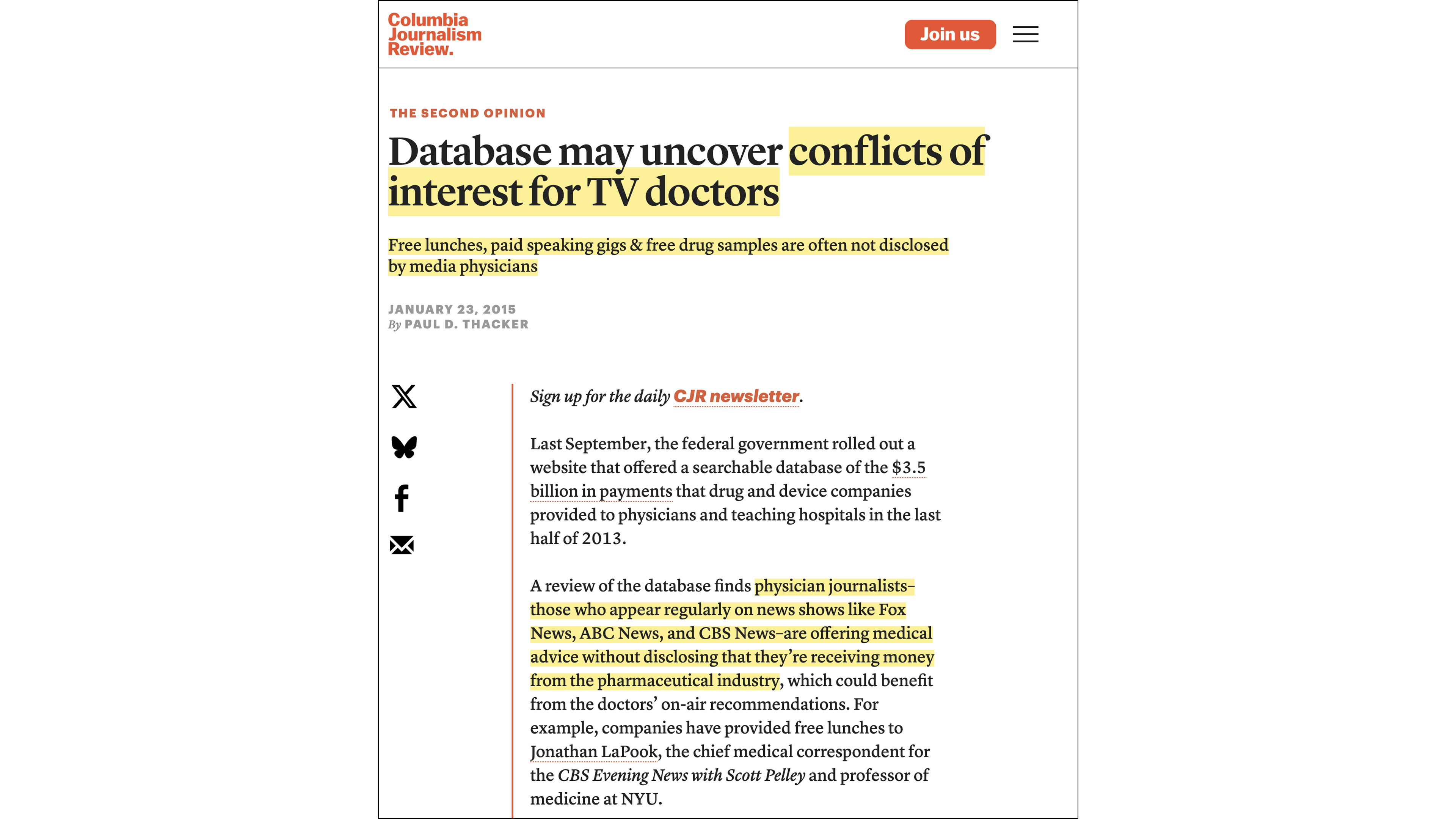
Many health stories rely on physicians and researchers presented as independent authorities, yet these commentators often have financial relationships with the pharmaceutical industry whose products or research they are discussing.
A 2017 CMAJ study of 591 international medical news stories found that 32% of commentators described in coverage as independent had financial conflicts of interest related to the topic being discussed. When those financial conflicts aligned with the findings being reported, 93% offered favorable commentary, compared with just 17% when they did not.
These financial conflicts of interest are often invisible to audiences. A 2000 New England Journal of Medicine analysis of 207 news stories about new drugs found that half of the cited commentators had financial ties to pharmaceutical manufacturers. Yet in most cases, audiences were not told: the relationships were disclosed only 39% of the time. The failure was even more pronounced in television coverage, where none of the 14 reports that cited commentators with industry ties disclosed those financial conflicts of interest.
Patient groups
Patient organizations are frequently used as sources in health reporting, providing journalists with human stories, personal testimony, and public-facing perspectives that shape how medical issues are understood.
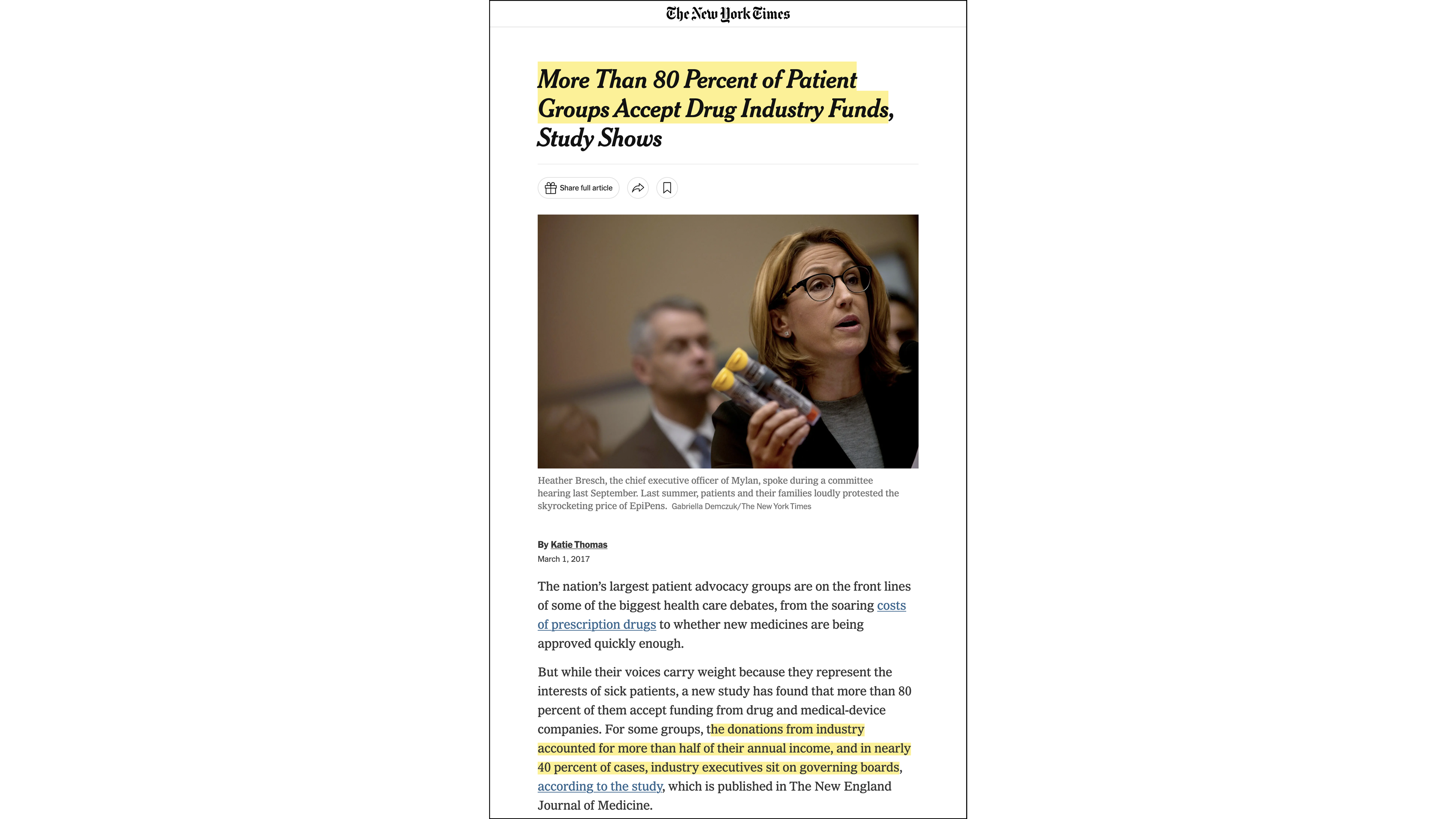
Industry funding is widespread among patient organizations. A 2017 New England Journal of Medicine analysis of 104 of the largest U.S. patient advocacy organizations found that 83% received financial support from drug, device, or biotechnology companies, while 39% had a current or former industry executive on their governing board. Transparency was limited: only 57% disclosed donation amounts, only 10% disclosed how donations were used, and only 12% had policies addressing institutional conflicts of interest. A 2023 BMJ Open study further found that pharmaceutical payments to UK patient organizations were overwhelmingly directed toward groups aligned with companies’ existing products and drug-development pipelines.
This creates a form of credibility transfer: pharmaceutical interests can be amplified through organizations portrayed by the media as independent patient advocates, leading audiences to view industry-aligned positions as grassroots perspectives rather than advocacy shaped by corporate funding.
Disease-awareness campaigns
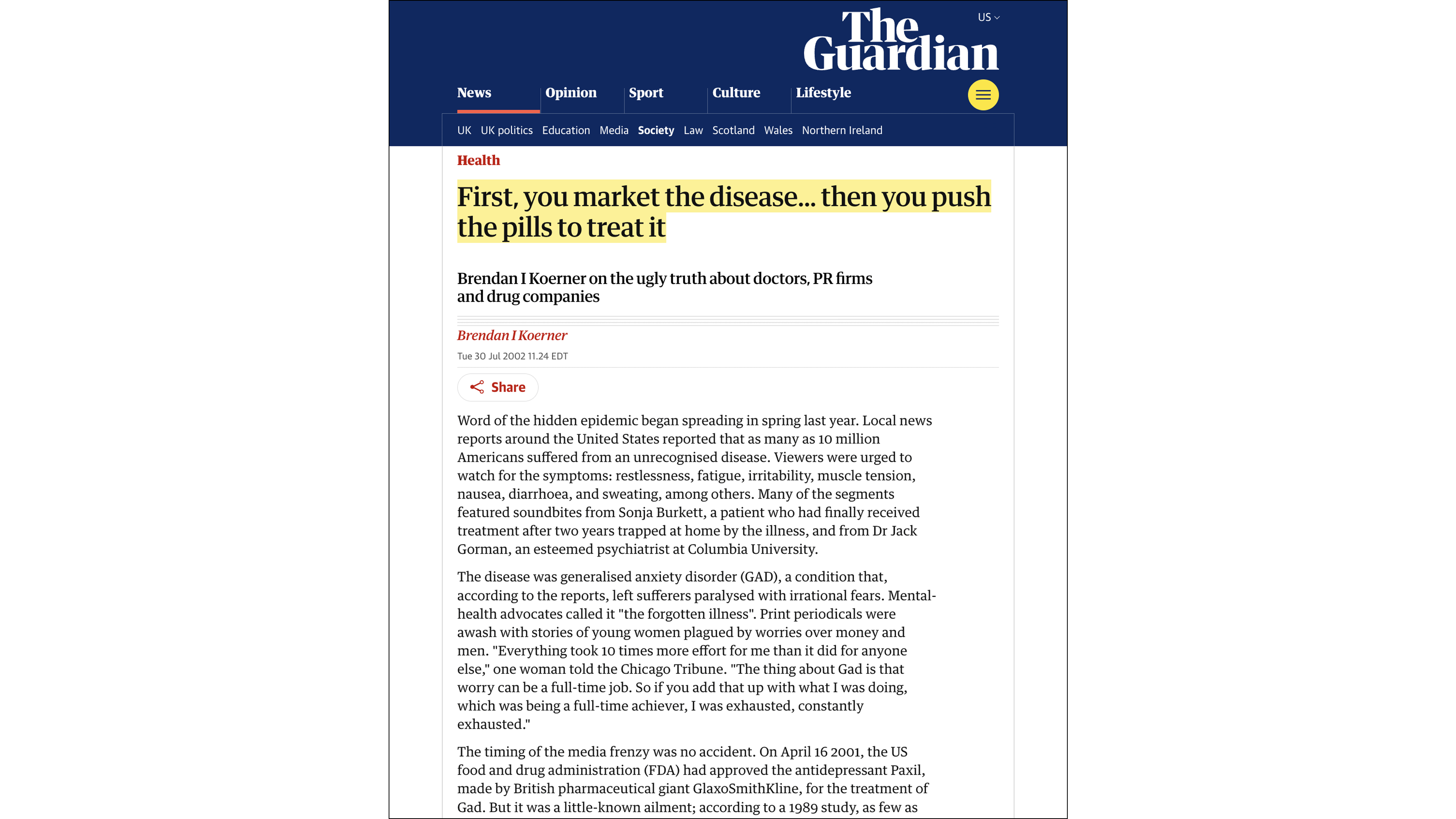
Pharmaceutical influence in the media extends beyond promoting specific products. Disease-awareness campaigns shape public understanding of medical conditions without directly advertising a drug.
These campaigns often frame everyday symptoms and experiences through a medical lens, encouraging people to seek diagnosis and treatment. By shaping perceptions of disease before a product is ever mentioned, they can expand demand for medical interventions. FDA research has found that these communications can blur the line between education and drug promotion, causing consumers to associate disease information with pharmaceutical solutions even when no product is named.
The growth of disease-awareness campaigns has been dramatic. A 2019 analysis published in JAMA found that the number of U.S. disease-awareness campaigns running annually increased more than ninefold, from 44 in 1997 to 401 in 2016. In 2016 alone, pharmaceutical companies spent $430 million on unbranded disease-awareness campaigns.
Ultimately, these campaigns shape how people define illness and decide what warrants treatment.
Selective framing of medical evidence
The selection of sources is only one part of the process. How that information is framed also shapes how the public understands treatments, risks, and evidence.
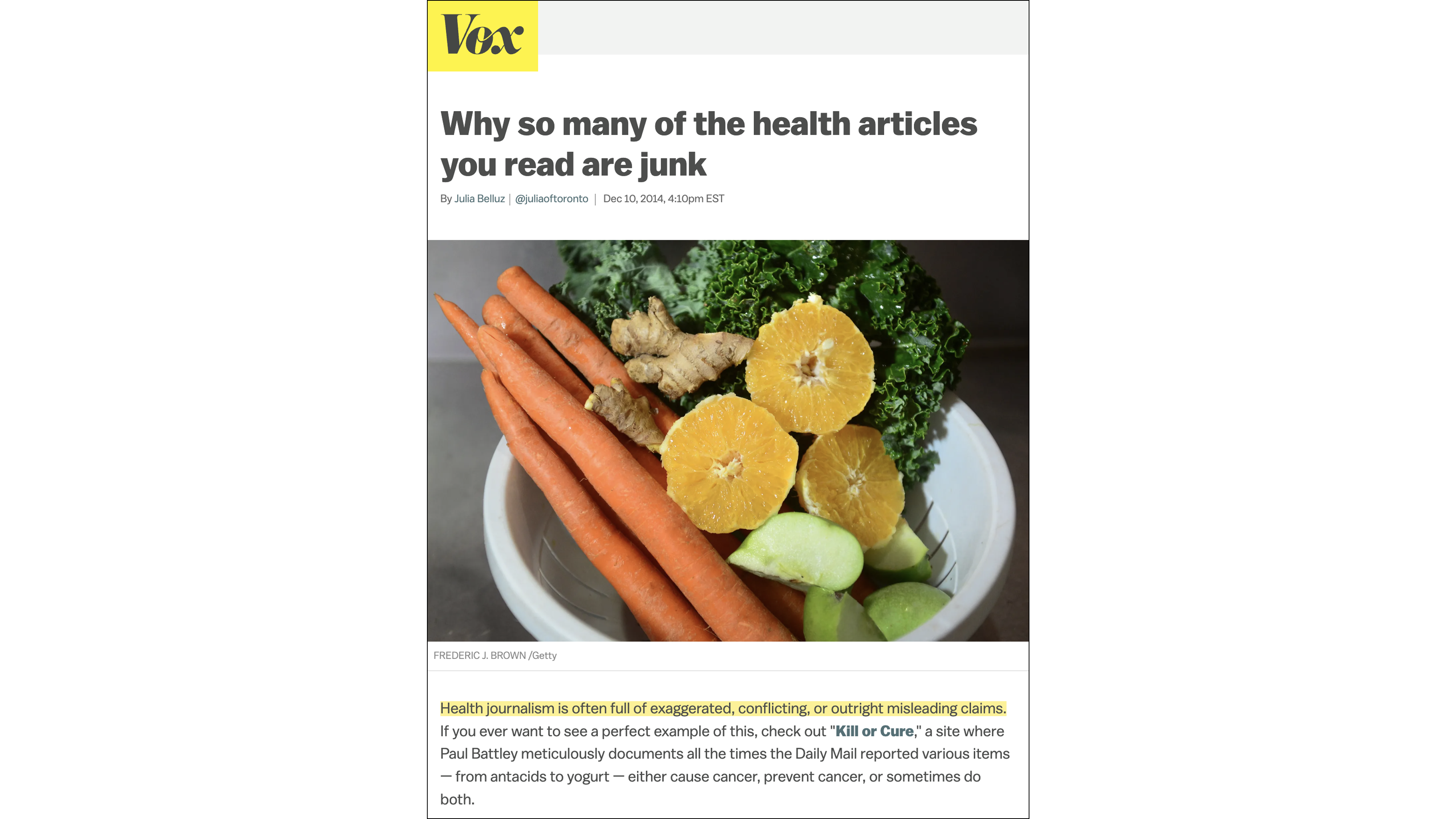
Health news frequently omits critical context. HealthNewsReview.org, which evaluated 500 U.S. health news stories in a 2008 analysis published in PLOS Medicine, found widespread failures in reporting the information needed for informed decision-making. Between 62% and 77% of stories failed to adequately address harms, benefits, evidence quality, or alternative options. Only 33% adequately covered potential harms, while only 28% adequately quantified benefits.
When benefits are reported, they are frequently presented in ways that exaggerate their apparent importance. News coverage often emphasizes relative risk reductions without providing sufficient context about absolute risk reductions. This distinction matters because relative risk can make treatments appear far more effective than their actual impact. A treatment that reduces a risk from 2% to 1%, for example, can be described as cutting risk by 50%—a technically accurate statement that can nevertheless create a very misleading impression of the magnitude of the benefit.
Harms are also frequently filtered out. A study of health news stories featured on Google Health News found that 25% omitted adverse events from media coverage even though those same harms were explicitly reported in the underlying papers. More broadly, 88% of news stories contained at least one form of “spin,” including exaggerated claims, unsupported interpretations, or conclusions that went beyond the evidence.
The result is a pattern in which medical news consistently amplifies benefits while minimizing uncertainty and harms.
Digital expansion of pharmaceutical marketing
Pharmaceutical influence is no longer confined to newspapers and television. As audiences have migrated online, pharmaceutical marketing has followed, expanding into search engines, social media platforms, and other digital channels.
Healthcare and pharmaceutical digital advertising is projected to reach approximately $26.2 billion in 2026, compared with roughly $6.9 billion for traditional advertising channels. By 2027, digital formats are projected to account for approximately 82% of healthcare advertising spending. This matters because digital platforms increasingly determine how people discover and consume health information.
Digital platforms
Digital platforms are not passive distributors of health information—they determine visibility. Search engines rank results, social media platforms recommend content, and algorithms decide which information receives attention—and which remains effectively invisible. In traditional media, editors and publishers controlled distribution; in digital environments, that function is performed by ranking systems, recommendation algorithms, and platform policies.
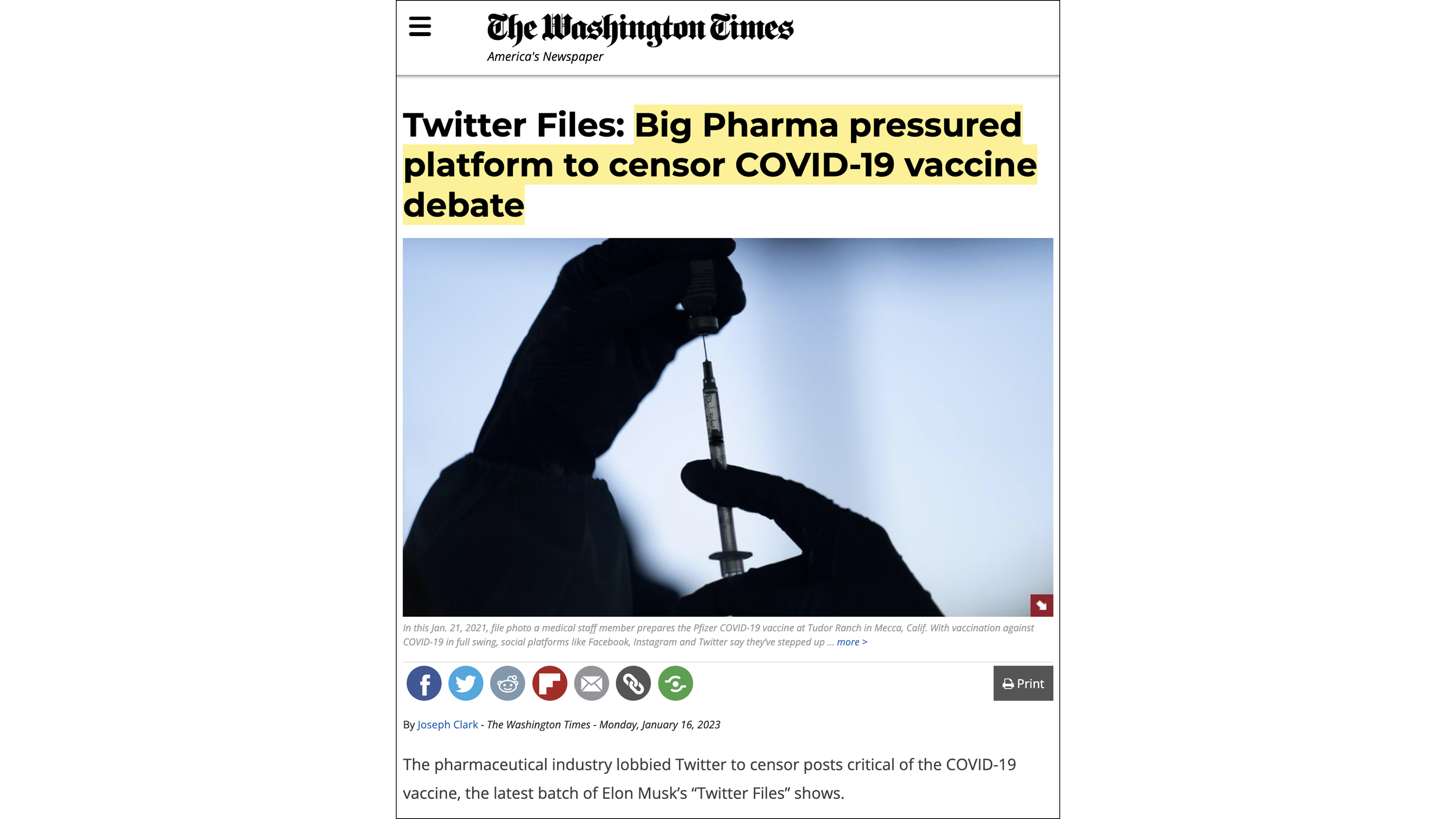
Google’s 2018 “Medical Update” illustrates how these systems can reshape access to health information. A study across ten European countries found that health and medical websites experienced substantial declines in search visibility after the update, with median visibility scores falling by approximately 48% within a year. Ranking systems do not merely determine what people see—they can shape what people believe. A 2014 study showed that manipulating the proportion and order of vaccine-related search results shifted people’s vaccination attitudes, with greater exposure to anti-vaccination content increasing skepticism toward vaccines.
Social media health influencers
Pharmaceutical companies increasingly market through patient influencers, physician influencers, and other health content creators, making commercial messages appear as personal experience, education, or independent medical advice rather than advertising.
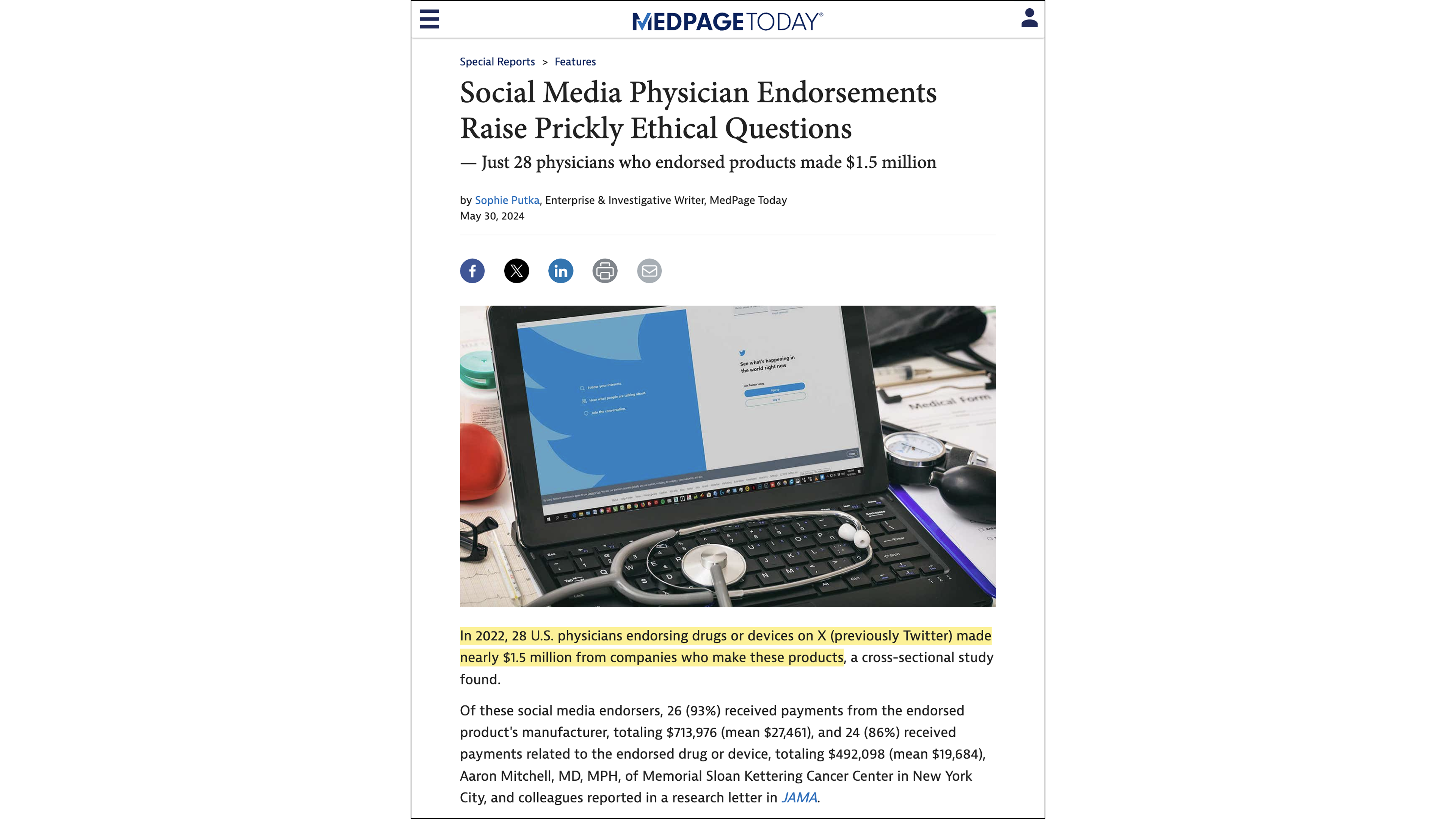
A 2023 study described patient influencers as a form of interactive direct-to-consumer advertising, embedding pharmaceutical promotion within personal stories and disease narratives. Physician influencers represent another extension of this model. A 2024 JAMA analysis found that 61% of physicians’ medical endorsements on X (formerly Twitter) were sponsored testimonials, while nearly half failed to disclose industry compensation.
International spillover
Although the United States has one of the most permissive environments for pharmaceutical promotion, pharmaceutical influence over health media is not uniquely American. Countries that restrict direct-to-consumer drug advertising still face many of the same underlying dynamics, and global news organizations, wire services, and digital platforms allow narratives shaped in major pharmaceutical markets to spread internationally. Pharmaceutical influence therefore travels across media systems even where direct-to-consumer advertising is restricted. As Dr. Ike Iheanacho, editor of the UK-based Drug and Therapeutics Bulletin, has noted, these interactions between the pharmaceutical industry and the media are “universal and perennial.”
Conclusion
Pharmaceutical influence over media does not require controlling every journalist, newsroom, or story. It operates through structures that shape incentives, visibility, and credibility.
Ownership ties, advertising dependence, PR pipelines, industry-linked voices, patient organizations, and digital platforms all influence which medical narratives reach the public and how they are understood.
The result is a media environment that functions less as an independent watchdog of pharmaceutical power and more as part of the system that normalizes it.
This article is part of an ongoing series on the epistemic capture of modern medicine.
Published:


Upcoming:
Regulatory Agencies
These articles will make up a crash course on the epistemic capture of modern medicine—in the same vein as my Vaccine Crash Course series:


Subscribe to follow the series and receive future installments in your inbox.
If you found this useful, share it with a friend, become a paid subscriber, or gift a subscription. Paid subscriptions give you full access to every article and help this Substack climb the rankings to reach more readers.
Update: The Dr. Wojak Substack Chat has been overhauled. It used to get noisy—now paid subscribers control new threads, keeping discussions focused and higher quality. Everyone can still read and reply. If you left before because of notification fatigue, that’s been fixed—and worth coming back to.
If big pharma actually made any products that worked with your body to promote health, were non-toxic, non-poisonous and listed NO side effects, they would sell themselves and no marketing would be required. But they do not and never will.
Big pharma is not in the health business as that would create fewer reasons for anyone to use their products. A healthy body needs NOTHING that big pharma provides...NOTHING.
The MSM? I avoid that dangerous clown show like the plague it is.
Excellent Article and, All TRUE!!
Tragic indeed. But by the grace of God, many people are waking up and watchful now!! Thank YOU for your hard work and dedication to expose the deceptive practices generally found in the Global Medical "Death Cult" that is definitely not concerned with the Health of people!! Thank God again for His grace for the Doctors who are not wilfully blind and corrupt.